


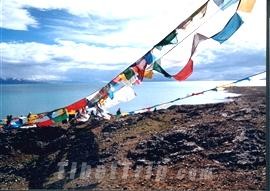
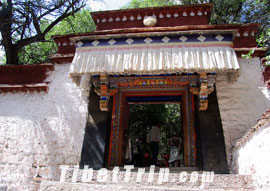
Like other parts of Tibet, most of Tibetan people in Chamdo Region believe in Tibetan Buddhism . There are many ancient monasteries, murals and sculptures that have been left in the name of Tibetan Buddhism. Splendid sacred mountains and holy lakes are also scattered throughout the region. Besides, there is a Catholic church in the region, one of the two Catholic churches in Tibet. Hot springs in the region are also legendary for their curative effects. Rare animals such as golden monkey and red deer are well protected in natural reserve areas.
 Ancient Tea-Horse Road (South Silk Road) is another feature of Chamdo Region. In the year 641, Princess Wencheng entered Tibet to marry King Songtsen Gampo. She brought a great deal of books, various tools, seeds, art and craftsmen, and tea. The Tibetan like tea very much but the climate in Tibet is unfavorable for the planting of tea trees. So, many trade caravans brought tea, silk and other goods from inner China and then sold them to the Tibetans. Most of them departed from Yunnan and passed through Chamdo Region to Lhasa. The road on the steep cliffs and wild grasslands were narrow and dangerous and it was vital that the caravans were alert and cautious at all times during their trek to Tibet. At that time, it took half a year's time to arrive in Lhasa from Yunnan.
Nowadays, Bamda Airport and national highways can provide good transportation options for the increasing number of visitors coming to Chamdo Region every year. Hotels and facilities have been improved and restaurants of Sichuan cuisine can be found in every town and county. If you like wildlife, nature and exotic Khampa culture, don't hesitate to come to Chamdo!
Ancient Tea-Horse Road (South Silk Road) is another feature of Chamdo Region. In the year 641, Princess Wencheng entered Tibet to marry King Songtsen Gampo. She brought a great deal of books, various tools, seeds, art and craftsmen, and tea. The Tibetan like tea very much but the climate in Tibet is unfavorable for the planting of tea trees. So, many trade caravans brought tea, silk and other goods from inner China and then sold them to the Tibetans. Most of them departed from Yunnan and passed through Chamdo Region to Lhasa. The road on the steep cliffs and wild grasslands were narrow and dangerous and it was vital that the caravans were alert and cautious at all times during their trek to Tibet. At that time, it took half a year's time to arrive in Lhasa from Yunnan.
Nowadays, Bamda Airport and national highways can provide good transportation options for the increasing number of visitors coming to Chamdo Region every year. Hotels and facilities have been improved and restaurants of Sichuan cuisine can be found in every town and county. If you like wildlife, nature and exotic Khampa culture, don't hesitate to come to Chamdo!